

Spatial Logic

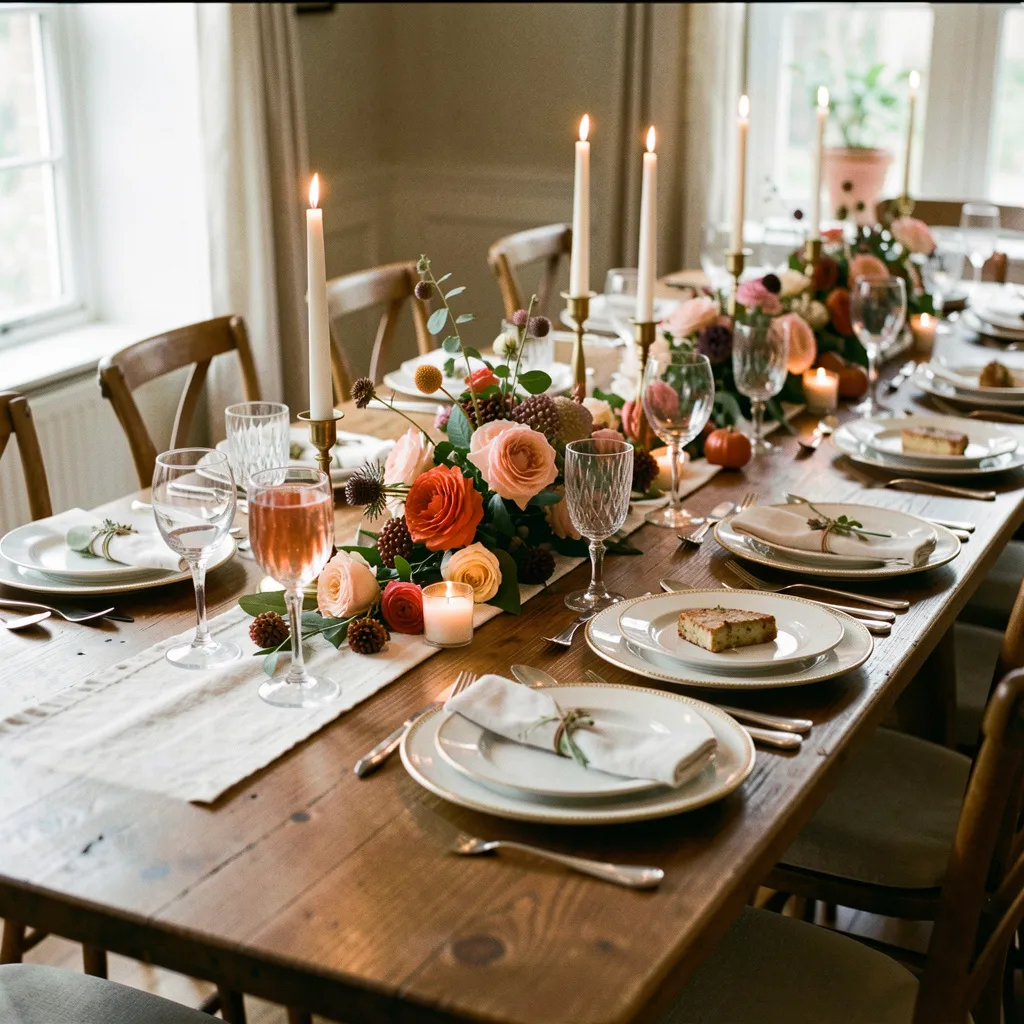
Every placement serves a purpose. The arrangement of elements guides both visual flow and social interaction.

Strategic placement of table elements for optimal flow

Visual Hierarchy

The eye naturally follows certain paths. By understanding visual weight, contrast, and focal points, we create arrangements that feel balanced and intentional.

Table setting designed to facilitate natural conversation

Conversation Zones

Placement affects how guests interact. Strategic spacing and element positioning can encourage dialogue while maintaining comfortable personal boundaries.

Dining experience choreography through thoughtful arrangement

The Choreography of Dining

A well-designed table setting considers the entire meal experience. From the initial approach to the final course, each element should support the flow of the event. This means considering reach distances, sight lines, and the practical needs of serving and clearing.

We think of table arrangement as choreography—each movement, each interaction, is anticipated and supported by the design. Items are placed where they'll be needed, when they'll be needed, creating a seamless experience for both hosts and guests.

Principles of Arrangement

Fundamental concepts that guide our approach to table design.

Proportion

The relationship between elements and the space they occupy. Proper proportion creates harmony and prevents visual overwhelm or underwhelm.

Rhythm

The repetition and variation of elements creates visual rhythm. This guides the eye and creates a sense of movement across the table.

Balance

Both symmetrical and asymmetrical balance have their place. The choice depends on the desired atmosphere and the occasion's formality.

Practical Application

How these principles translate into real-world table settings.

Intimate Gatherings

Smaller tables require careful consideration of scale. Elements should be proportional to the space, and arrangements should facilitate easy conversation across the table.

Formal Events

Larger settings allow for more elaborate compositions. Here, we can create multiple focal points and use repetition to unify the overall design across multiple tables.